Response to the Address by Tô Lâm, General Secretary of the Communist Party of Vietnam and President of the Socialist Republic of Vietnam
Your Excellency President Tô Lâm,
Distinguished guests, parliamentary colleagues, ladies and gentlemen:
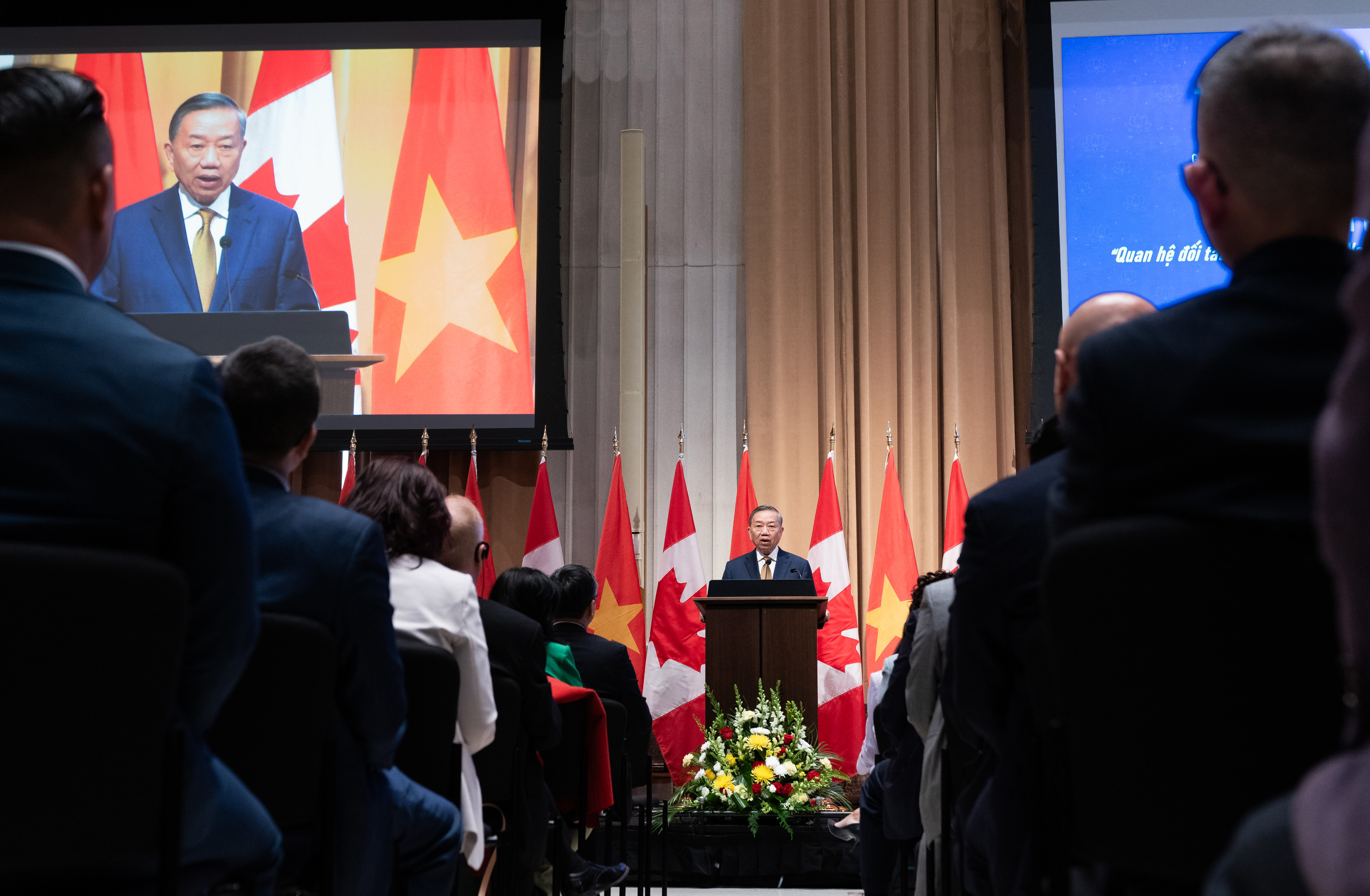
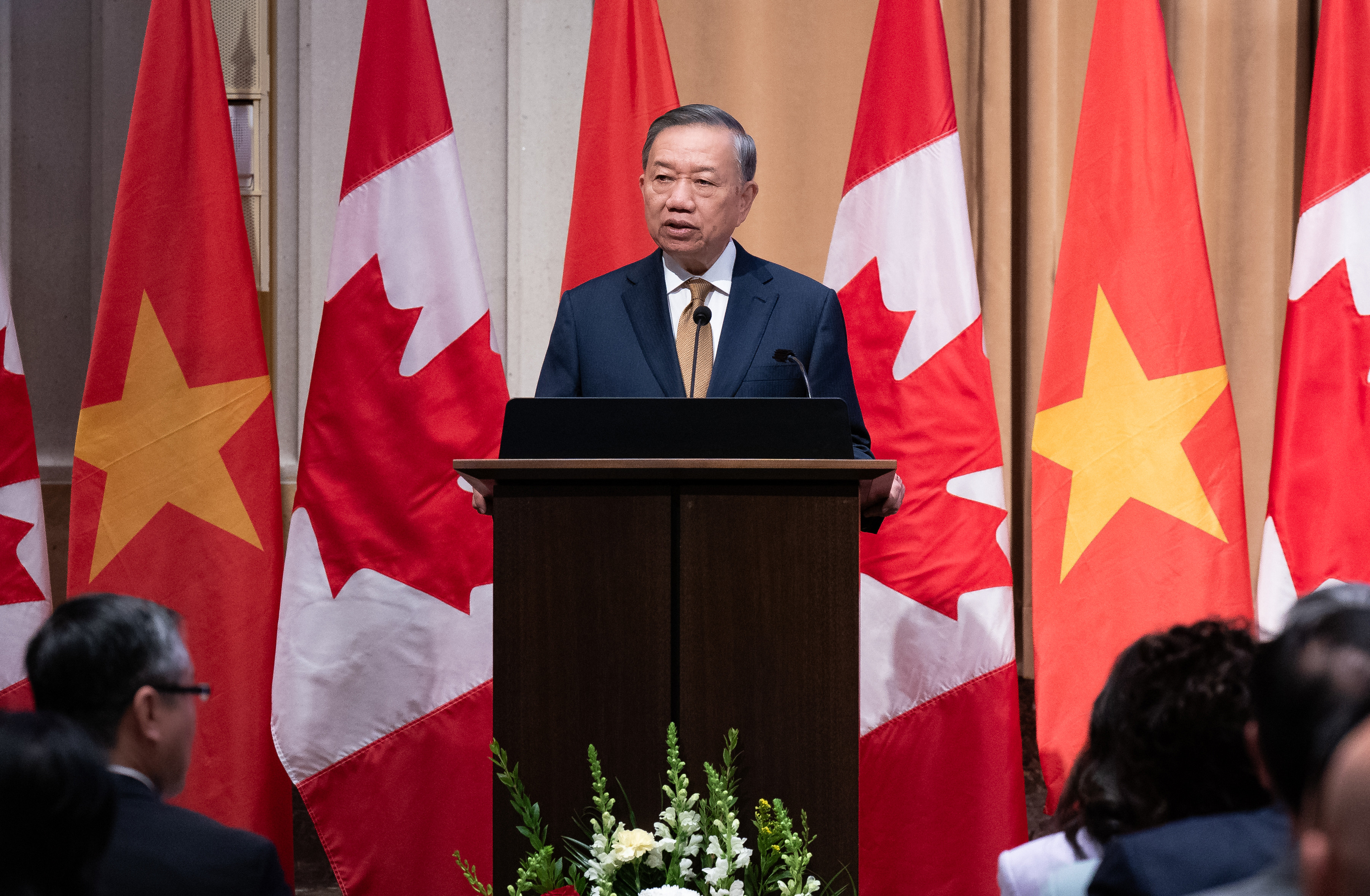
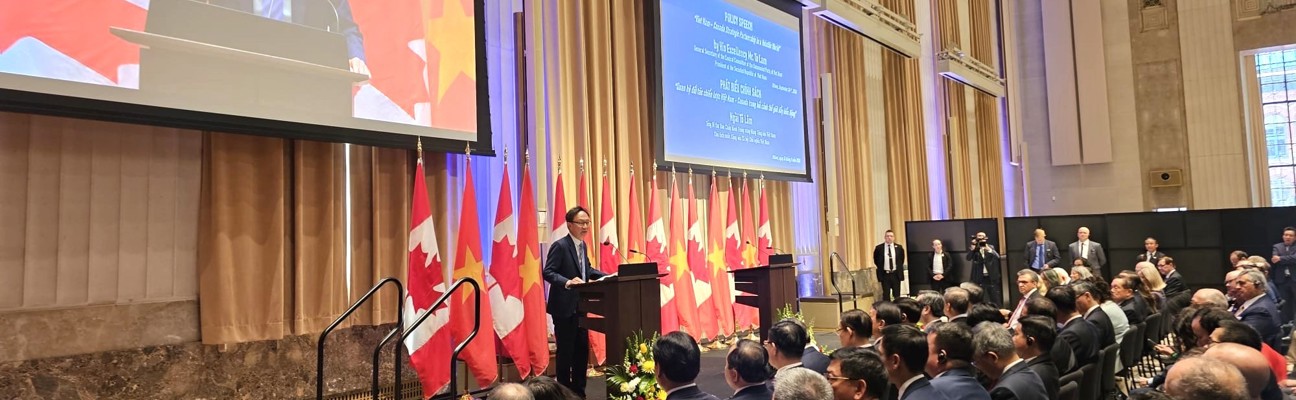
It is a great honour to welcome you, Mr. General Secretary and President, to the Parliament of Canada on this historic State Visit.
Thank you for sharing Vietnam’s perspective on the challenges facing the world, and on the opportunities before our two countries. Your remarks today form part of a continuing Vietnamese contribution to international understanding at a time when, as you have pointed out, there is seemingly more international suspicion than there is international understanding.
In your keynote address at the Shangri-La Dialogue in Singapore earlier this year, you spoke of three interconnected crises: pressures on the international order, difficulties in existing development models, and a loss of strategic trust. You connected security with economic development and climate change, and called for dialogue, respect for international law, and more inclusive and sustainable growth.
There are interesting parallels with Prime Minister Mark Carney’s remarks at Davos, where he spoke of a rupture in the international order, the vulnerabilities created by economic dependence, and the need for countries such as Canada to strengthen their capacity at home while building a wider range of partnerships abroad.
Canada and Vietnam have different histories and political systems, and we will not always see every issue in the same way. But both countries face an increasingly important question: how do we preserve the capacity to make independent choices while remaining open to the enormous benefits of international cooperation?
Vietnam’s own development experience gives particular weight to this question.
This year marks forty years since the launch of Đổi Mới. Over those four decades, Vietnam has undergone an extraordinary transformation, moving from widespread poverty to much higher living standards and much deeper participation in the global economy.
Vietnam now looks toward its centenary goals for 2030 and 2045, with ambitions for modern industry, higher incomes, greater productivity and innovation. Canada wants Vietnam to succeed in this next stage, because the most durable relationships are those in which each country can find opportunity in the success of the other.
That, I believe, should be at the heart of the Strategic Partnership that was announced a few hours ago: not only how Canada and Vietnam can help one another navigate a more difficult international environment, but what we can accomplish together through trade, investment, knowledge and relationships between people.
We already have a strong architecture on which to build. Canada and Vietnam are members of the CPTPP. We work together through APEC and Canada’s engagement with the Association of Southeast Asian Nations.
For Canada, this is especially important because trade diversification has become an economic imperative.
There are those who argue that Canada cannot meaningfully reduce its dependence on the enormous economy immediately to our south because geography is destiny.
Vietnam offers an interesting reason to question that proposition.
Your country shares a long border with China, one of the world’s largest economies and an indispensable economic partner, yet Vietnam has also built deep commercial relationships across the Pacific, with the United States, Europe and the rest of Asia. Indeed, Vietnam’s share of trade with China and the United States is roughly the same.
Our circumstances are very different, and we should not draw easy comparisons. But there is nevertheless something for us to consider in Vietnam’s ability to combine a very substantial economic relationship with its giant neighbour with an equally determined effort to develop markets much farther away.
As co-chair of the Canada–Vietnam Parliamentary Friendship Group, I was especially pleased, Mr. President, by your support for greater interaction between our legislatures, and deeply honoured that you met with our Friendship Group immediately before your address.
Parliamentary relationships allow us to understand one another beyond the formalities of diplomacy. Over time, they create friendships that can survive changes of government and periods of difficulty. They become part of the connective tissue that makes a relationship between countries durable.
And that brings me, Mr. President, to a particularly fitting coincidence.
Tomorrow is Tết Trung Thu, the Mid-Autumn Festival, an occasion especially associated in Vietnam with family, children and future generations. We are therefore all the more honoured that you and your delegation are spending the eve in Tết with us here in Canada.
President Hồ Chí Minh once said:
“For the benefit of ten years, plant trees; for the benefit of a hundred years, cultivate people.”
As it turns out, you planted a tree on the grounds of Rideau Hall just this morning, which will surely generate benefits for a decade and beyond.
But your speech has also alluded to the second part of President Hồ Chí Minh’s observation, which is about the cultivation of people-to-people relations.
The relationships between countries may begin with diplomacy, trade and agreements, but they endure because people come to know one another—because young people study together, businesses build together, parliamentarians talk to one another, and new generations inherit the friendship.
Tomorrow, families in Vietnam will celebrate Tết Trung Thu under the same moon that we will see here in Canada. We may be separated by a vast ocean and shaped by different histories, but distance need not preclude friendship, nor prevent us from building something enduring together.
The tree has been planted. Our task now is to cultivate the relationship—and the generations who will carry it forward.
Mr. President, on behalf of my parliamentary colleagues, I wish you, your delegation, and the people of Vietnam:
Chúc mừng Tết Trung Thu!
Thank you for honouring Canada with this historic visit, and for your address today.